Why pigment names do not guarantee identical paint
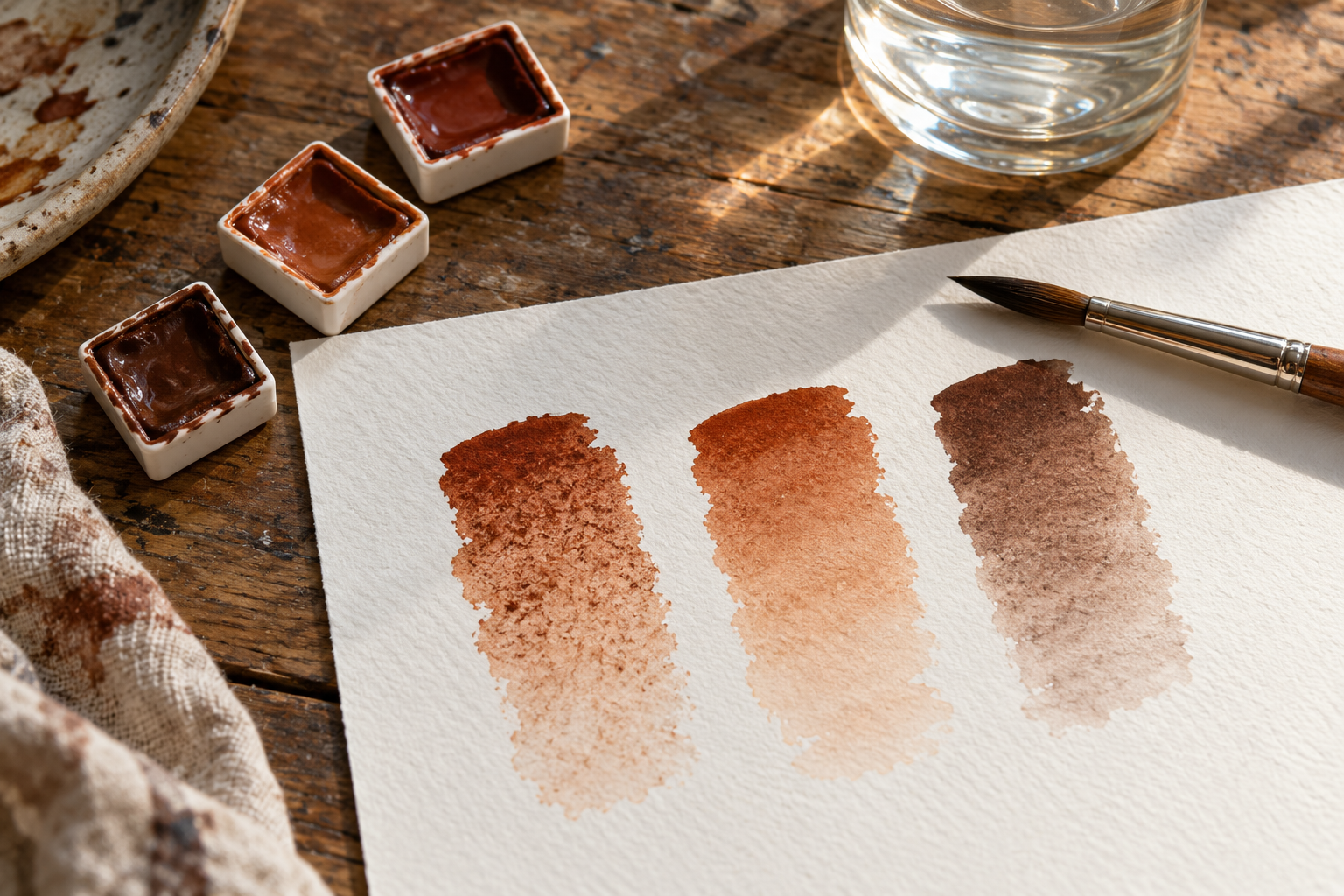
The name on a watercolour tube describes only part of what reaches the paper. Three paints called Burnt Sienna reveal why pigment codes, recipes and a test wash all matter.

About the author
I keep watercolor sketchbooks in Portland and work as a display assistant in a neighborhood shop. I began drawing ordinary household objects because they were available whenever I had half an hour. Cups, shoes, plants and the view from the nearest window remain reliable subjects.
Paper & Pigment follows the making of small pictures rather than promising a finished masterpiece on every page. I write about choosing a subject, mixing a modest palette, leaving a wobble in a drawing and recognizing the difference between useful practice and repeated self-criticism. I like visible brushwork, a little mess and paper that has clearly been handled.
My sketches often begin at a kitchen table and end with paint on the wrong sleeve. Outside drawing I enjoy bicycle rides, secondhand ceramics and exchanging postcards with friends. I believe a sketchbook can record attention even when it does not record an accurate teacup.
The name on a watercolour tube describes only part of what reaches the paper. Three paints called Burnt Sienna reveal why pigment codes, recipes and a test wash all matter.
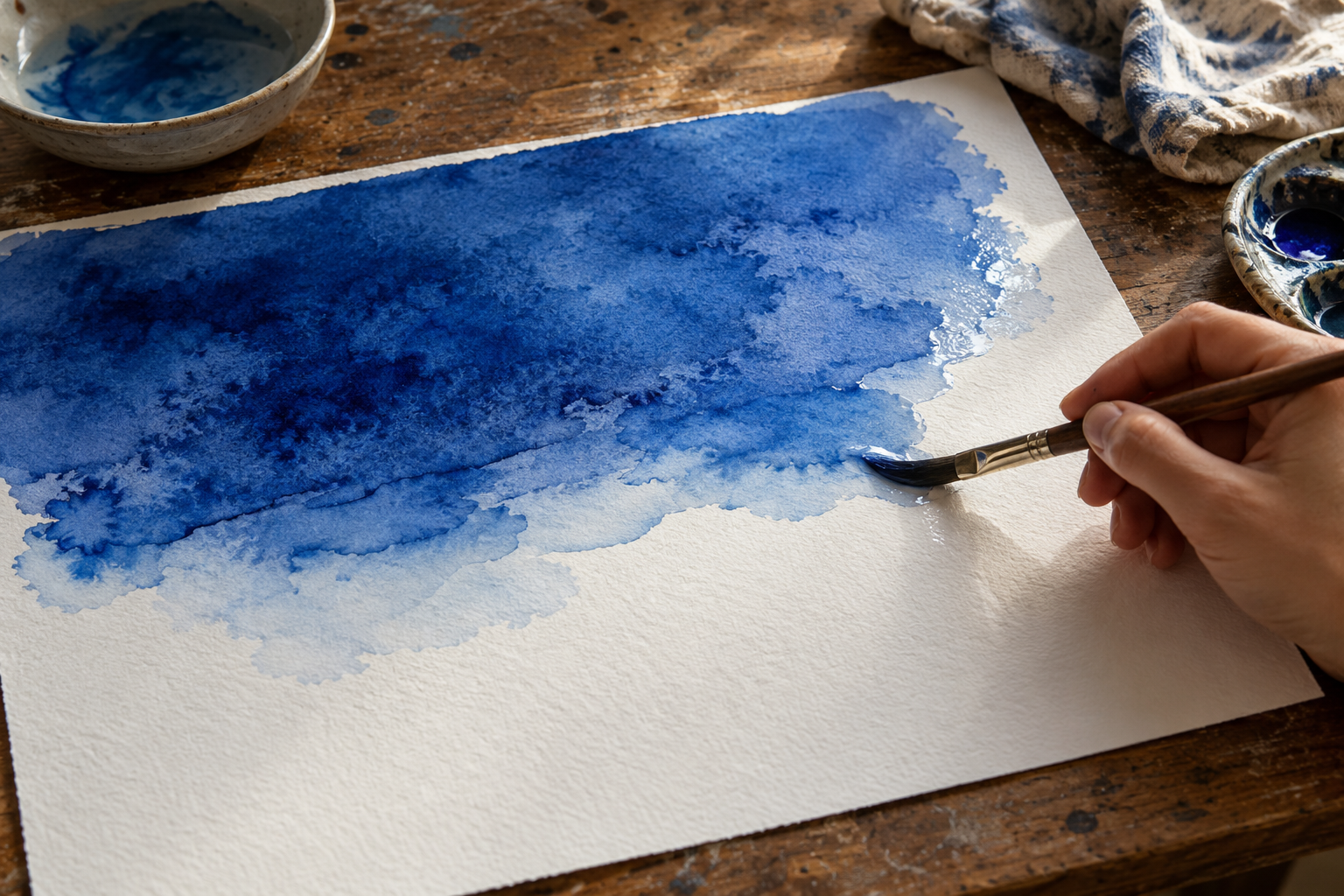
A wash depends on how long water and pigment can move before the paper takes them in. Sizing sets part of that interval, but the sheet's surface and the paint matter too.
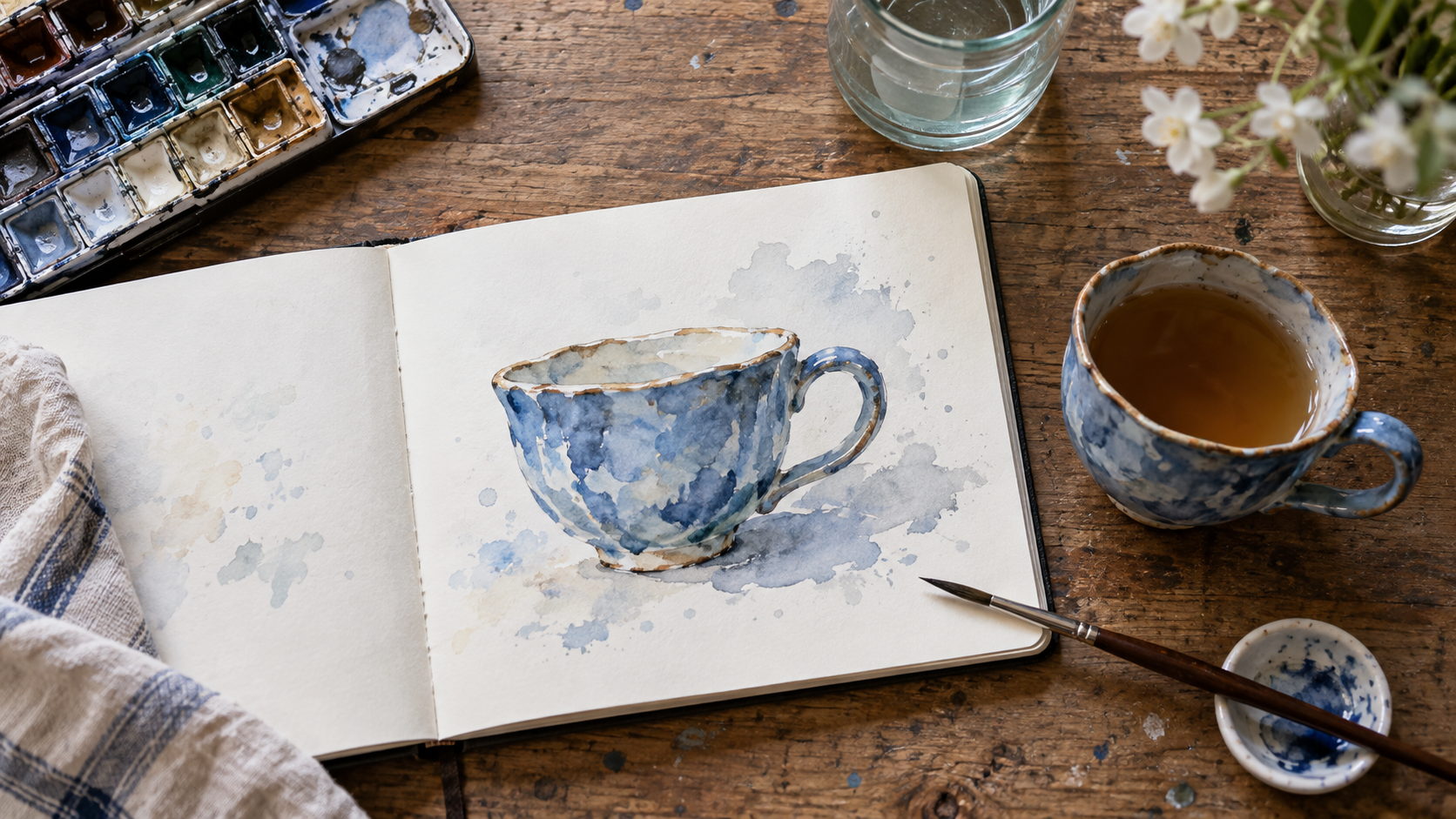
The cup in the drawing leans as though it has received disappointing news. Its handle is larger than the handle on the table. The rim is an ellipse with an independent political agenda. I considered
I owned enough paints to make choosing a color into a separate activity. The collection looked wonderfully promising until I sat down to use it. Then the possibilities became a reason to postpone the first